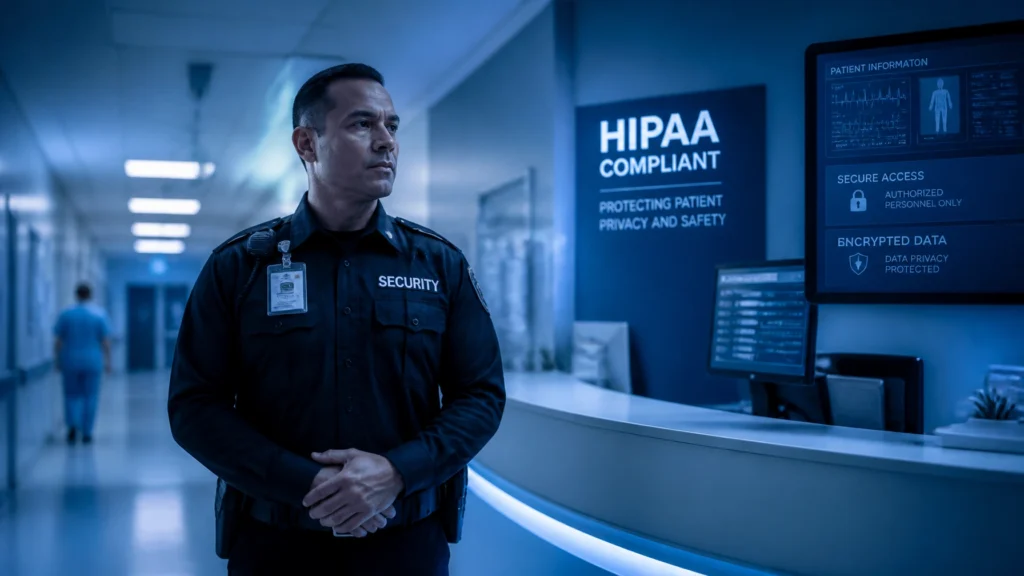
For hospital administrators and healthcare facility managers, the word "HIPAA" usually brings to mind encrypted servers, complex passwords, and cybersecurity firewalls. While digital data protection is critical, there is a physical side to compliance that many organizations overlook: until the Office for Civil Rights (OCR) comes knocking with a heavy fine.
At TSP Guard Security, we’ve seen how easy it is for a high-traffic medical facility to slip up. Physical security isn't just about stopping intruders; it's about safeguarding Patient Health Information (PHI) from accidental disclosure, unauthorized access, and theft.
Are you making these common mistakes? Here is how you can fix them and ensure your facility stays fully compliant.
1. Treating Physical Security as Secondary to Cybersecurity
Many facilities invest six figures into state-of-the-art firewalls but leave their physical "back door" wide open. A common trend identified by the OCR is the neglect of physical safeguards: facility access, workstation security, and device controls.
The Mistake: Believing that because your data is encrypted, your facility is secure. If an unauthorized person can walk into a server room or pick up an unencrypted tablet from a nurse’s station, your digital defenses mean nothing.
The Fix: Implement a holistic security strategy. This includes deploying 24/7 security guard services that are trained to recognize physical vulnerabilities in real-time. Security is a chain; don't let the physical link be the weakest.
2. Failing the "Shoulder Surfing" Test
In a busy hospital, workstations are everywhere. From the ER check-in desk to the hallway computer kiosks, screens are constantly displaying sensitive patient data.
The Mistake: Placing monitors in areas where patients, visitors, or unauthorized vendors can easily see the screen: a practice known as "shoulder surfing."
The Fix:
- Install privacy screens on all public-facing monitors.
- Position desks so screens face away from high-traffic walkways.
- Utilize TSP Guard Security officers to monitor these areas and remind staff to lock their screens when stepping away.

3. Allowing "Stale" Access Permissions to Linger
Staff turnover in healthcare is high. When a nurse, administrator, or contractor leaves the organization, their physical access needs to be revoked immediately.
The Mistake: Failing to deactivate key cards or collect physical keys the moment an employee is terminated or resigns. We often see "ghost" profiles in access control systems that allow former employees to enter restricted zones weeks after they've left.
The Fix: Integrate your HR departure reports with your security team’s protocols. At TSP Guard Security, we recommend a regular audit of access logs. Our on-site guards can assist in verifying that only current, authorized personnel are entering sensitive areas like the pharmacy or medical records room.
4. Unmonitored "High-Risk" Zones
Every hospital has "hot zones" where PHI is most vulnerable: medical record rooms, pharmacies, and IT data centers.
The Mistake: Relying solely on a locked door without active monitoring. A lock can be picked, and a code can be shared. Without a record of who entered and when, you cannot maintain HIPAA's "Audit Controls" requirement.
The Fix: Combine advanced technology with physical presence. Use real-time monitoring and modern surveillance to track every entry. Having a TSP Guard officer stationed near these zones provides a layer of human intelligence that cameras alone cannot offer.

5. Using Generic Security Guards Without HIPAA Training
A standard security guard might know how to handle a physical altercation, but do they know how to handle a HIPAA breach?
The Mistake: Hiring a general security firm that doesn't provide specialized healthcare training. If a guard sees a patient's chart left on a bench and ignores it, they are contributing to a compliance failure.
The Fix: Partner with a specialized provider like TSP Guard Security. Our officers receive training specific to the healthcare environment. They understand that protecting a facility means protecting patient privacy. They are taught to proactively spot abandoned records, unsecured devices, and overheard conversations that could lead to a violation.
"True security in a healthcare setting isn't just about physical safety; it's about the integrity of patient trust and the strict adherence to privacy standards that HIPAA demands." : TSP Guard Leadership Team
6. The "Open Door" Policy in the Wrong Places
Hospitals are public spaces, but they shouldn't be "open" everywhere. Visitor management is often one of the most significant gaps in hospital security.
The Mistake: Allowing visitors to wander into restricted wards or clinical areas without a proper check-in process. This leads to "incidental disclosures" where unauthorized people see or hear PHI.
The Fix: Establish a strict on-site security presence at every entrance. TSP Guard officers can manage visitor logs, issue temporary badges, and ensure that guests are escorted or directed only to authorized areas.
7. Lack of 24/7 Response and Incident Reporting
A HIPAA violation doesn't just happen during business hours. In fact, many breaches occur during the night shift when staffing is lower and oversight is relaxed.
The Mistake: Only having high-level security coverage during the day. If a physical breach occurs at 3:00 AM: such as a theft of a laptop containing ePHI: and it isn't reported until 9:00 AM, you've lost critical time for mitigation.
The Fix: Deploy 24/7 security guard services. Continuous patrolling ensures that any physical threat to PHI is identified and addressed immediately. Our guards provide detailed incident reports that can serve as vital documentation during a HIPAA audit.
Why TSP Guard is the Answer for Hospital Administrators
Managing a hospital is complex enough without the looming threat of HIPAA violations. At TSP Guard Security, we specialize in taking the burden of physical compliance off your shoulders.
What sets us apart?
- Licensed and Specialized Guards: Our team is trained for the unique pressures of the medical environment.
- Advanced Tech Integration: We use modern surveillance and real-time monitoring to ensure no corner of your facility is left vulnerable.
- 15+ Years of Expertise: We understand the nuances of risk management in high-stakes settings.
- Customizable Solutions: Whether you need firewatch services for a wing under construction or mobile patrols for your parking structure, we tailor our plan to your facility.
Secure Your Facility Today
Don't wait for a compliance audit to find the holes in your security plan. Proactive protection is the only way to ensure patient safety and regulatory peace of mind.
Contact TSP Guard Security today for a comprehensive security consultation. Let us help you turn your HIPAA "mistakes" into a fortress of compliance.
Get a Quote from TSP Guard Security